
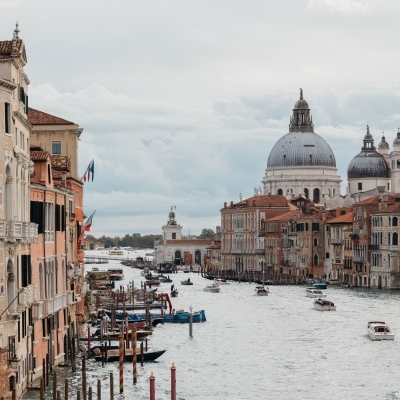

Festa della Salute
Venice’s magnificent Basilica di Santa Maria della Salute at the eastern end of the Grand Canal commemorates the city’s deliverance from a deadly plague outbreak in 1631. Each year on November 21, a pontoon bridge is built across the Canal. To walk across it and light a votive candle inside the church is a deep-rooted local tradition – one that visitors are more than welcome to share. Stalls selling frittelle (fried donuts), aniseed candies and other sweet treats spring up en route, while on the evenings of the 20th and 21st, families tuck into castradina, a salted mutton and cabbage casserole that is the default Festa della Salute dish.

Venice Art Biennale 2026, various venues
Every two years, the Venice Art Biennale turns the entire city into a sprawling urban gallery that aims take the pulse of the contemporary art scene. Titled ‘In Minor Keys’, the 61st edition pairs a curated central exhibition with national pavilions and collateral events scattered across the city. The Londra Palace Venezia is a short stroll from the Biennale’s two main venues, the former naval boatyards of the Arsenale and the Giardini park, where many of the most important national pavilions are clustered. Allow at least four days to take in the full range of offerings, and consider a fall visit, when the shows are generally less crowded.

DREAMERS, MUSEO FORTUNY
It’s always a joy to visit the palazzo that was the home and atelier of great Venetian artist, designer and cultural icon Mariano Fortuny. An ably curated exhibition programme is the icing on the cake. The latest show to be hosted by this absorbing house-museum is a retrospective dedicated to Austrian artist Erwin Wurm, whose ironic, provocative sculptures use absurdity to highlight all that is extraordinary about our ‘ordinary’ world.
Photo Markus Gradwohl

HYBRIDS. LEANDRO ELRICH AT THE NEGOZIO OLIVETTI
If you associate Venetian architecture and interiors exclusively with the distant past, you need to visit the Olivetti Store in Piazza San Marco. Commissioned at the end of the 1950s by enlightened entrepreneur Adriano Olivetti, local architectural genius Carlo Scarpa proved that it was possible to create an authentically Venetian style of Modernism. Now managed by Italian heritage association FAI, the space plays host during the 2026 Art Biennale to an exhibition of around twenty works by Argentinian artist Leandro Elrich that blur the distinctions between man, nature and the cosmos, creating new hybrid forms that question fixed identities.
Photo Duccio Benvenuti
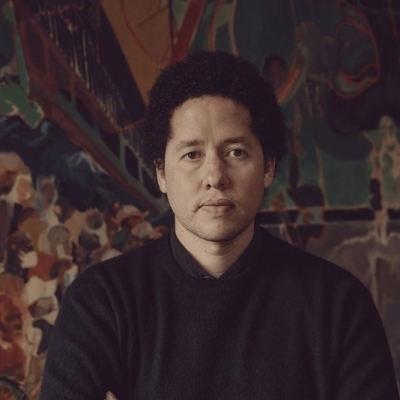
Michael Armitage: The Promise of Change
The Pinault Collection’s two-storey exhibition space of Palazzo Grassi has rarely been used so effectively as in this show dedicated to contemporary artist Michael Armitage. The British-Kenyan artist draws on the histories, myths, current affairs and landscapes he grew up with in East Africa, in a series of absorbing dreamlike narrative paintings that are here displayed sparsely, sometimes singly, in the Palazzo’s neo-classical rooms, like the chapters of a book.
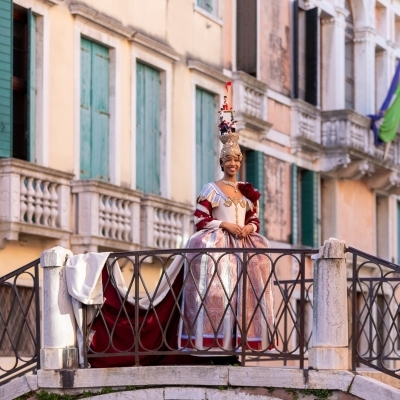
Carnevale di Venezia
Revived in 1979, almost two centuries after it was banned by Napoleon, Venice’s Carnival turns the lagoon city into a delightful, fairy-tale place where at every corner, masked revellers parade, some of them local families in charming homemade costumes, others international Carnevale fans in rich historical cloaks and dresses from the Casanova era. The full programme of events, from the official Grand Ball to concerts and street parties, can be found at carnevale.venezia.it.
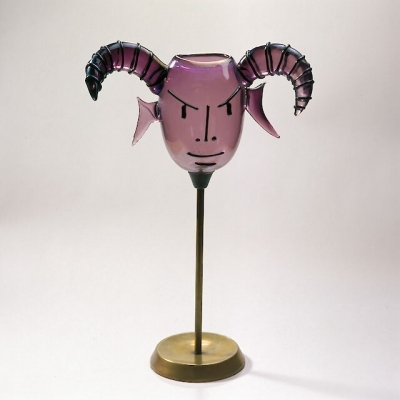
La Fucina degli Angeli: Peggy Guggenheim and 20th Century Art Glass
In the mid 1950s, a Venetian glass expert called Egidio Costantini opened a gallery in the Dorsoduro district called La Fucina degli Angeli (‘The Furnace of Angels’) dedicated enirely to works in glass by leading artists – works that he personally commissioned and followed through every stage of their creation. Peggy Guggenheim was a fervent admirer and supporter of this ambitious project, which engaged artists of the calibre of Jean Cocteau and Lucio Fontana. In the museum that was once her former Grand Canal residence, more than a hundred pieces created for the Fucina have been selected for this intriguing show. The ticket also covers entrance to the impressive permanent display of some of the works assembled by Guggenheim in a lifetime of collecting.
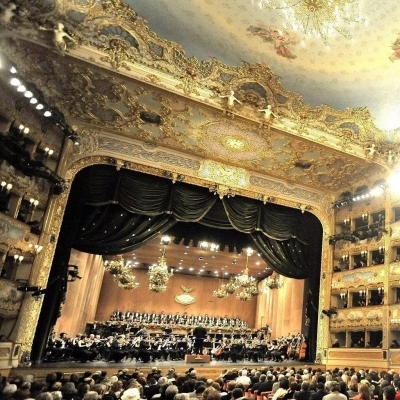
La Fenice, the 2026-27 season
It’s had its ups and downs over the years, but Venice’s historic La Fenice opera house is quietly consolidating its reputation among global fans of bel canto for its ability to attract serious talent.
Among the highlights of the first six months of the 2026-27 season are a new staging of Umberto Giordano’s Fedora (13-22 November), a reprise of the opera house’s much-lauded production of Puccini’s Madame Butterfly (30 January – 9 February) that was originally created for the 2013 Art Biennale, and a new Carmen (23 April – 4 May) directed by Romain Gilbert and conducted by John Axelrod.


